Oct 15, 2026
Multi-Zone Inert Gas Fire Suppression: How Directional Valves Protect Multiple Rooms
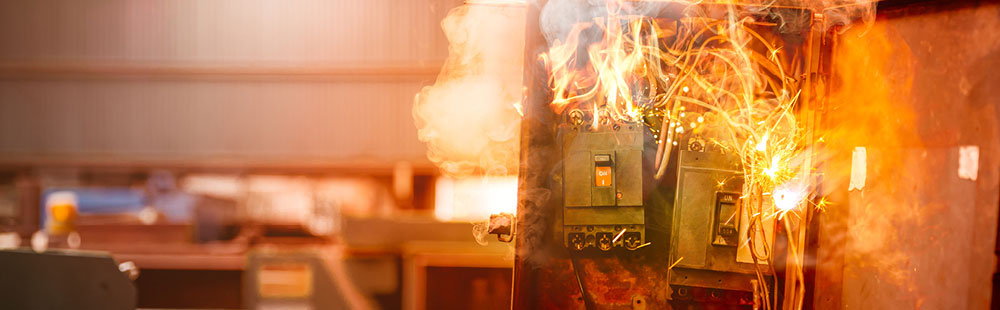
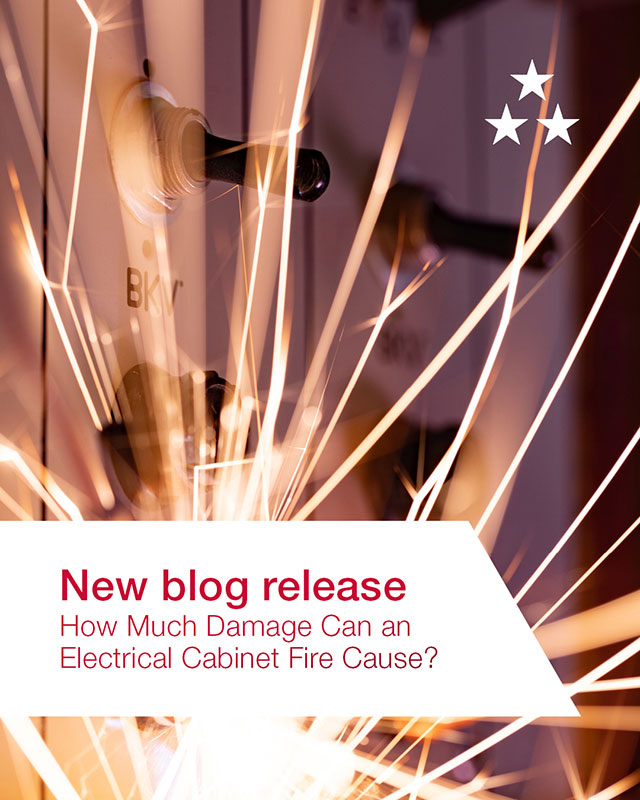
Most electrical cabinet fires start silently before developing into more serious incidents. These fires can result from a combination of electrical, thermal, and environmental factors. Because many components are concentrated inside confined electrical enclosures, even a minor fault can generate enough heat to damage insulation, ignite nearby material, or trigger a larger failure. Understanding the main ignition sources is an important step in reducing fire risks and preventing damage to critical equipment.
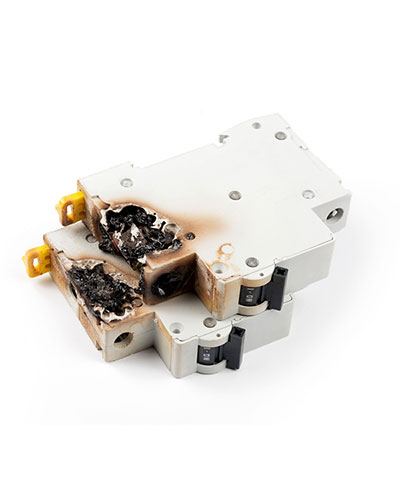
Electrical cabinets contain highly sensitive and flammable components, including printed circuit boards (PCBs), power supplies, transformers, switches, relays, cable insulation (PVC, XLPE, or rubber), and batteries (lithium-ion, lead-acid). When a critical component is exposed to excessive heat or flames, the damage can quickly extend to surrounding equipment and combustible material inside the enclosure.
Even if a fire starts within a single cabinet, it may spread beyond the original enclosure. Flames can breach the enclosure, igniting cable trays, control panels, and nearby storage of paper, solvents, or chemicals. Heat transfer can also damage HVAC systems, ventilation ducts, and structural supports, compounding the destruction.
Smoke and soot deposit corrosive and conductive residues on electronics that weren’t directly in the fire, rendering them inoperable. Ultimately, the damage is rarely limited to the component where the fire started. And while replacing damaged equipment can already be costly, the wider operational and financial consequences of an electrical cabinet fire can be even greater.
The cost of an electrical cabinet fire can extend far beyond replacing damaged components. Even a localized incident can disrupt operations, affect the surrounding environment, and create additional costs long after the fire has been extinguished.
Production downtime can occur when the affected cabinet controls critical machinery or equipment, forcing operations to stop until repairs and safety checks are completed. In some cases, the impact may extend to an entire facility or part of a building if critical systems are affected.
Business interruption may also lead to delayed orders, reduced capacity, and missed delivery commitments and financial loss.
Repair and replacement costs can include damaged wiring, control devices, power supplies, specialist labor, cleaning, testing, and recommissioning.
Delays and loss of productivity can add further pressure, especially when replacement parts or technical support are not immediately available.
For this reason, protecting electrical cabinets also means protecting uptime, productivity, the facility and business continuity.
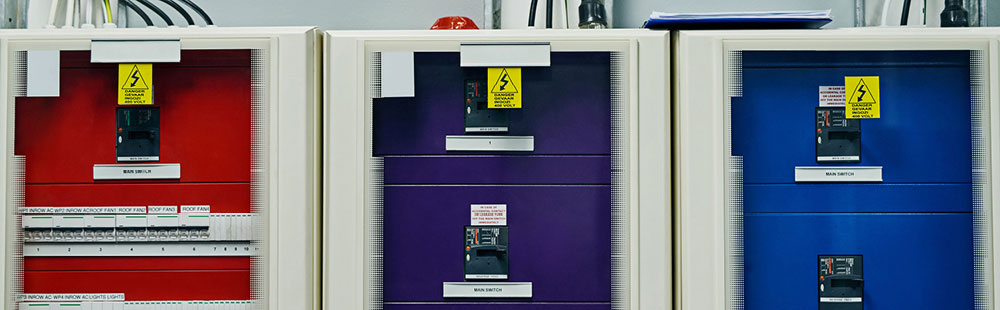
The first step in reducing electrical cabinet fire risk is prevention. Regular inspection and maintenance can help identify potential hazards before they develop into a fire.
Key preventive measures include:
Thermal imaging can also help identify abnormal hotspots, while temperature sensors can provide useful information on heat buildup inside critical enclosures. These measures can significantly reduce fire risk, but they cannot eliminate every possible electrical fault. For critical equipment, prevention should therefore be complemented by early detection and appropriate fire protection.
When prevention is not enough and a fire starts, the priority shifts from avoiding ignition to detecting and suppressing the fire as early as possible.
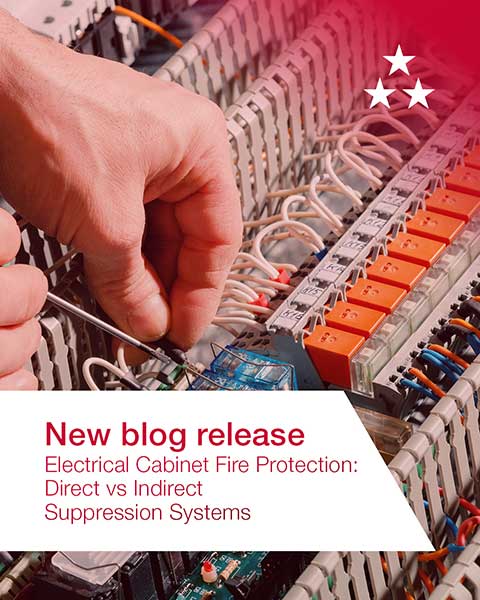
Automatic fire suppression systems installed directly inside or around an electrical cabinet can respond close to the source of the fire risk, without waiting for manual intervention. By acting while the fire is still localized, they can help limit fire spread, protect surrounding equipment, improve safety and reduce potential downtime.
FireDETEC® offers different automatic suppression configurations that can be tailored to the cabinet layout, fire hazard, extinguishing agent, installation constraints, and required level of protection. Depending on the application, the system can be designed to install within or around the protected enclosure with minimal impact on available space.
Depending on the selected configuration, FireDETEC® for electrical cabinet can provide:
By combining preventive maintenance with automatic fire protection systems, businesses can address both sides of the risk: reducing the likelihood of a fire starting and limiting its consequences if one does occur.